Vastu for Studio Apartments & 1BHKs: Smart Energy Solutions for Small Spaces
Traditional Vastu Shastra was developed when homes had:
- separate kitchens,
- separate bedrooms,
- courtyards,
- dedicated prayer rooms,
- and clearly defined living areas.
Today, many people live in:
- studio apartments,
- compact flats,
- micro-homes,
- and modern 1BHK apartments.
In these homes:
- the bedroom may be next to the kitchen,
- the dining area may double as a workspace,
- and the living room may become a guest bedroom at night.
This creates a common question:
Can Vastu still work when everything is in one room?
The answer is yes.
Modern Vastu focuses less on walls and more on:
- function,
- energy flow,
- visual separation,
- and psychological comfort.
The Challenge of Modern Compact Living
Small homes offer many benefits:
- affordability,
- convenience,
- easy maintenance,
- and efficient use of space.
However, they also create challenges such as:
- lack of privacy,
- visual clutter,
- mixed activities,
- and overlapping energies.
For example:
The energy needed for:
- sleeping,
- cooking,
- working,
- and relaxing
is very different.
Without proper separation, these energies can blend together and create mental fatigue.
Can Vastu Work in Small Apartments?
Absolutely.
Vastu is ultimately about:
- balance,
- harmony,
- flow,
- and intentional design.
You don’t need:
- large rooms,
- expensive renovations,
- or perfect floor plans.
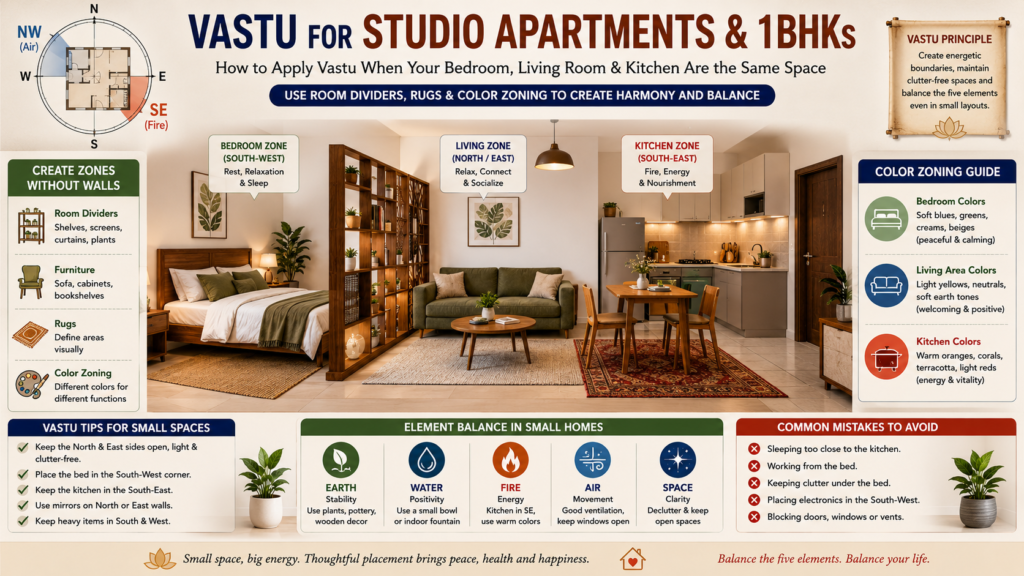
Instead, you can create energetic separation through:
- furniture,
- rugs,
- colors,
- lighting,
- and décor placement.
Understanding Functional Energy Zones
In modern Vastu, every activity carries its own energy.
| Activity | Energy Type |
|---|---|
| Sleeping | Rest and recovery |
| Cooking | Fire and nourishment |
| Working | Focus and productivity |
| Socializing | Communication and movement |
| Meditation | Calmness and clarity |
Even in a studio apartment, creating visual distinctions between these activities can improve energy flow.
Why Open-Plan Spaces Need Energy Separation
One of the biggest problems in studio apartments is:
Energy Overlap
For example:
- seeing your work desk from bed may create stress,
- seeing dirty dishes while relaxing may reduce mental calmness,
- sleeping beside electronics may affect relaxation.
Vastu encourages creating symbolic boundaries between activities.
Creating Zones Without Building Walls
The good news is:
You don’t need construction work.
Small changes can create surprisingly effective energy divisions.
Using Room Dividers
Room dividers are one of the simplest Vastu-friendly tools.
Examples include:
- folding screens,
- wooden partitions,
- decorative shelves,
- fabric panels,
- bamboo screens.
Benefits:
- improve privacy,
- reduce visual clutter,
- separate sleeping and working zones.
Using Furniture as Boundaries
Furniture can act as invisible walls.
Examples:
- a bookshelf behind the sofa,
- a console table between zones,
- a storage unit dividing sleeping and living areas.
This creates:
- visual structure,
- functional separation,
- improved organization.
Using Curtains and Screens
Curtains provide:
- flexibility,
- affordability,
- and softness.
They are especially useful for:
- separating the bed,
- creating meditation corners,
- hiding storage areas.
Color Zoning According to Vastu
Colors influence how a space feels emotionally.
Even when rooms share the same area, color can create energetic separation.
Bedroom Zone Colors
The sleeping area should encourage:
- calmness,
- rest,
- emotional relaxation.
Recommended colors:
- light blue,
- cream,
- soft beige,
- pale lavender,
- warm white.
Avoid:
- bright red,
- neon colors,
- intense contrasts.
Living Area Colors
The living area should feel:
- welcoming,
- social,
- comfortable.
Recommended colors:
- soft yellow,
- light green,
- neutral earth tones,
- warm beige.
Kitchen Zone Colors
The kitchen relates to:
The Fire Element
Recommended accents:
- soft orange,
- warm peach,
- coral,
- subtle red highlights.
Avoid overwhelming dark colors in cooking areas.
Rugs as Invisible Energy Boundaries
One of the easiest Vastu tricks for small homes is:
Rug Zoning
A rug visually defines a space without requiring walls.
Examples:
Bedroom Rug
Creates:
- calm,
- grounding,
- relaxation.
Living Room Rug
Creates:
- social energy,
- conversation focus,
- comfort.
Work Area Rug
Creates:
- productivity,
- mental focus,
- task-oriented energy.
Vastu Tips for Studio Apartment Bedrooms
Because the bedroom often shares space with other functions:
Important Tips
- Keep the bed separate from work zones
- Avoid clutter under the bed
- Use calming colors
- Limit visible electronics
- Create visual privacy where possible
Even a simple screen can dramatically improve bedroom energy.
Small Kitchen Vastu Solutions
In many studio apartments, the kitchen is part of the main room.
Ideal solutions include:
- keeping counters clean,
- minimizing appliance clutter,
- separating dining and cooking functions visually.
The South-East section of the apartment is traditionally associated with Fire energy and is ideal for kitchen activities when possible.
Home Office Corners in Small Spaces
Remote work has transformed modern apartments.
A dedicated workspace helps separate:
- work energy,
- and relaxation energy.
Home Office Tips
- Face East or North when possible
- Use task lighting
- Keep cables organized
- Avoid working from bed
This improves focus and productivity.
Storage, Clutter, and Energy Flow
Clutter becomes more noticeable in small homes.
Every item takes up:
- physical space,
- visual space,
- mental space.
Common clutter sources include:
- overflowing wardrobes,
- charging cables,
- unused gadgets,
- excess décor.
Regular decluttering is one of the most effective Vastu remedies.
Lighting Techniques for Different Zones
Lighting can create instant energy separation.
Bedroom Lighting
- warm,
- soft,
- relaxing.
Work Area Lighting
- bright,
- focused,
- task-oriented.
Living Area Lighting
- balanced,
- welcoming,
- comfortable.
Layered lighting helps define each zone.
Common Small Apartment Vastu Mistakes
1. No Functional Separation
Everything blends together.
2. Excessive Clutter
Creates stress and stagnation.
3. Working from Bed
Mixes productivity energy with relaxation energy.
4. Poor Lighting
Makes spaces feel smaller and heavier.
5. Overcrowded Furniture
Blocks movement and airflow.
Budget-Friendly Vastu Remedies
You don’t need expensive renovations.
Affordable solutions include:
Simple Upgrades
- rugs,
- curtains,
- folding screens,
- storage baskets,
- plants,
- better lighting,
- cable organizers.
These changes often improve both aesthetics and energy flow.
FAQs About Studio Apartment Vastu
1. Can Vastu work in a studio apartment?
Yes. Modern Vastu focuses on function and energy separation rather than room size.
2. How can I separate energies without walls?
Use rugs, room dividers, furniture, colors, and lighting.
3. Which colors are best for a sleeping area?
Soft calming shades such as blue, cream, and beige.
4. Can I work from my bedroom?
If necessary, create visual separation between work and sleep zones.
5. Does clutter affect Vastu?
Yes. Clutter is considered one of the biggest obstacles to positive energy flow.
6. What is the easiest Vastu improvement for small homes?
Decluttering and creating clear functional zones.
Conclusion
Living in a studio apartment or 1BHK doesn’t mean you must ignore Vastu.
In fact, modern Vastu is perfectly suited for compact living because it emphasizes:
- intentional design,
- organization,
- visual balance,
- and emotional comfort.
Through simple tools like:
- room dividers,
- rugs,
- color zoning,
- strategic lighting,
- and clutter management,
you can create a home that feels:
- larger,
- calmer,
- more organized,
- and energetically balanced.
The goal isn’t perfection.
The goal is creating a space where every activity has its place—even when everything happens in the same room.